The mill goes in first
6:20 am, feed mill. The roller mill is already running. Grain goes in the top and comes out cracked open, and everything else here waits for it. No mill, no ration. This morning I ran the feeding off my own software for the first time. It held until John, who runs this yard, drafted a pen, and then the plan would not bend.
THIS WEEK
Twelve days since the last issue, most of them at this table. What John’s crew now use in the morning: the bunk run on the phone, pen by pen, and a GPS route for the feed runs. The kill sheets from the meatworks — 170 files — now sit against the animals they belong to.
In between, I have been asking neighbours what they are doing with their paddocks.
WHAT I SAW
The two roller mills here are the bottleneck. This yard puts out [65 tonnes] of feed a day and they cannot keep up. Someone who sees the order book of the last company in this country still building roller mills told me it is full, a good part of it within a day’s drive. Some orders are for three and four mills at once. A roller mill is not something you buy to try. It goes in before the first animal. Every mill on that list is a feedlot that does not exist yet.
The paddocks explain why. It has been dry since January and the grass is not coming back. So the neighbours have started feeding out there — grain in a trough on grass, to get cattle to weight. Out here they call it backgrounding. Accreditation, with its audits and paperwork, comes later.
So every operation here is becoming a mixed one: paddock and pen, the same animal on both. Feedlot programs begin at the induction race. Paddock programs end at the fence. Nobody builds for the animal that crosses.
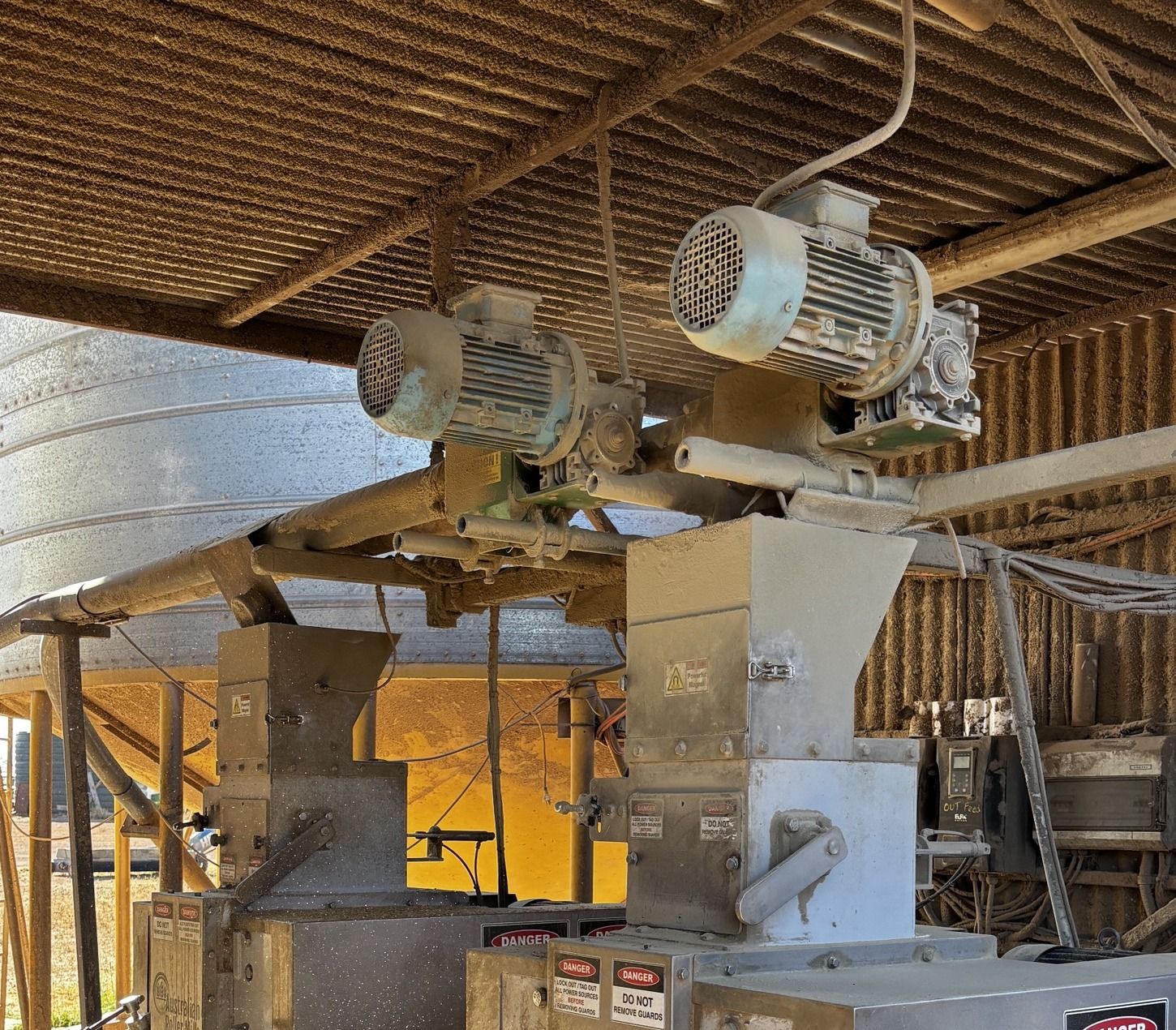
Feed mill, 20.Sep.26. The roller mill goes in before the first animal does.
I was counting the wrong thing.
WHAT IT CHANGED
My first market count was the accredited feedlots. It is public, and a record: 1.62 million head on feed in the March quarter, 92 per cent of capacity. I now think that is the smaller part — a third, maybe — of the operations feeding cattle. Nobody counts the rest, which is exactly the point.
And they turn over faster. A breeder sells one calf crop a year; a backgrounder fills and empties the same paddock several times over, every turn a new set of animals, weights and treatments.
Sell too early and you leave weight on the animal. Sell late and every day costs more than it earns. Here the crossover sits around 80 days on feed, and they only reach it because the cattle arrive already on grain. A backgrounded animal does not spend its first weeks learning to eat; it comes in heavier and pulls from day one. Which is why the record cannot start when the animal does.
And this morning showed me the other half. A plan calculated once is already wrong. Pens get redrafted while you are feeding, and the plan has to recalculate on the spot and still feed every animal.
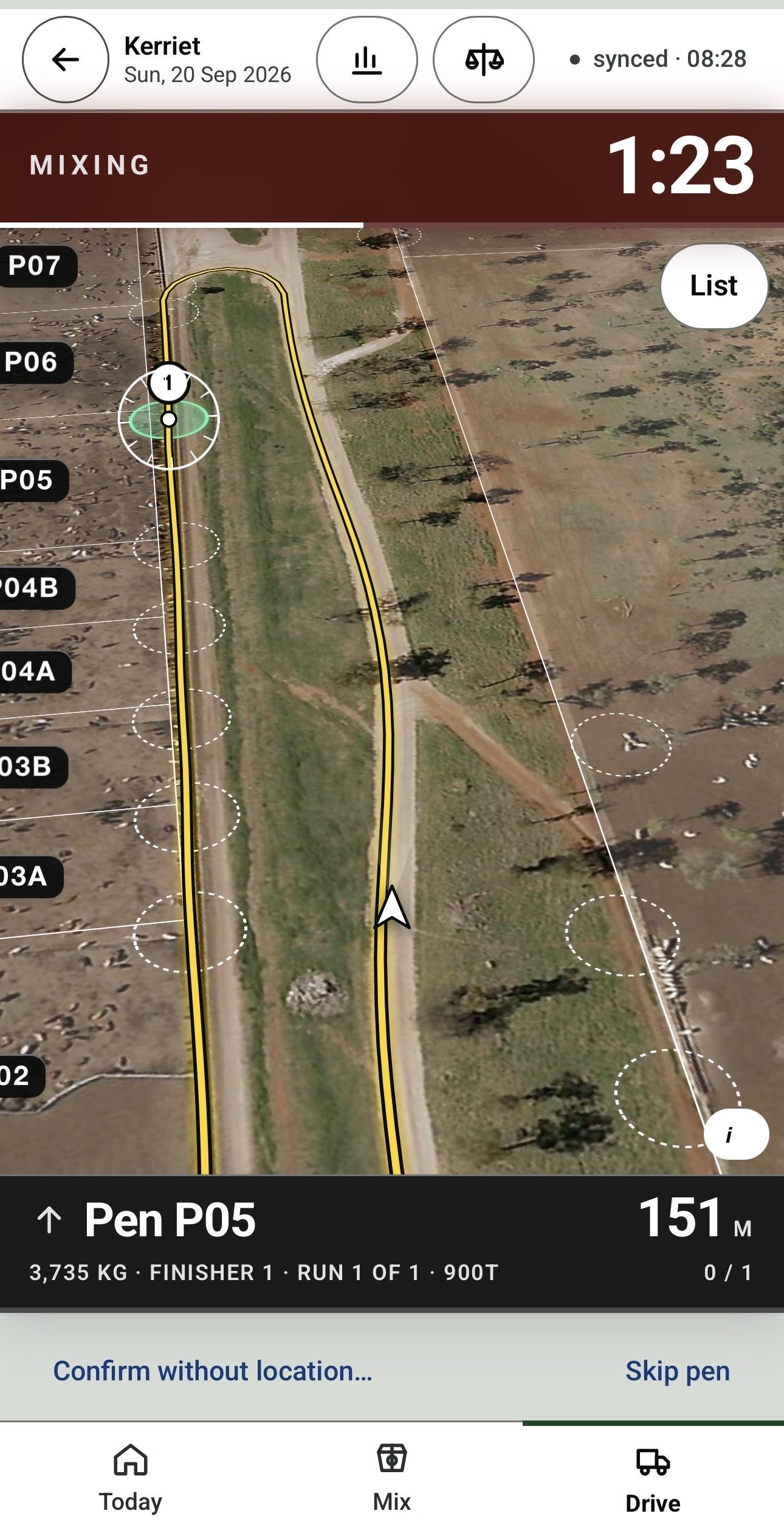
Pen P05, 151 metres out, mixer still turning. The plan behind this run was set before I left the mill, and it would not move.
STILL OPEN
One doubt, and it is the one that decides things. Does a backgrounder pay for software before they accredit, or only after? Everything above assumes the answer is ‘before’. I have been asking the neighbours about their paddocks. I have not yet asked any of them that.
Talk soon,
Yannik
Follow the build.
New issue every fortnight — weekly while I’m on the ground in Queensland. Written as it happens, including the parts where I turn out to be wrong.
Subscribe →